
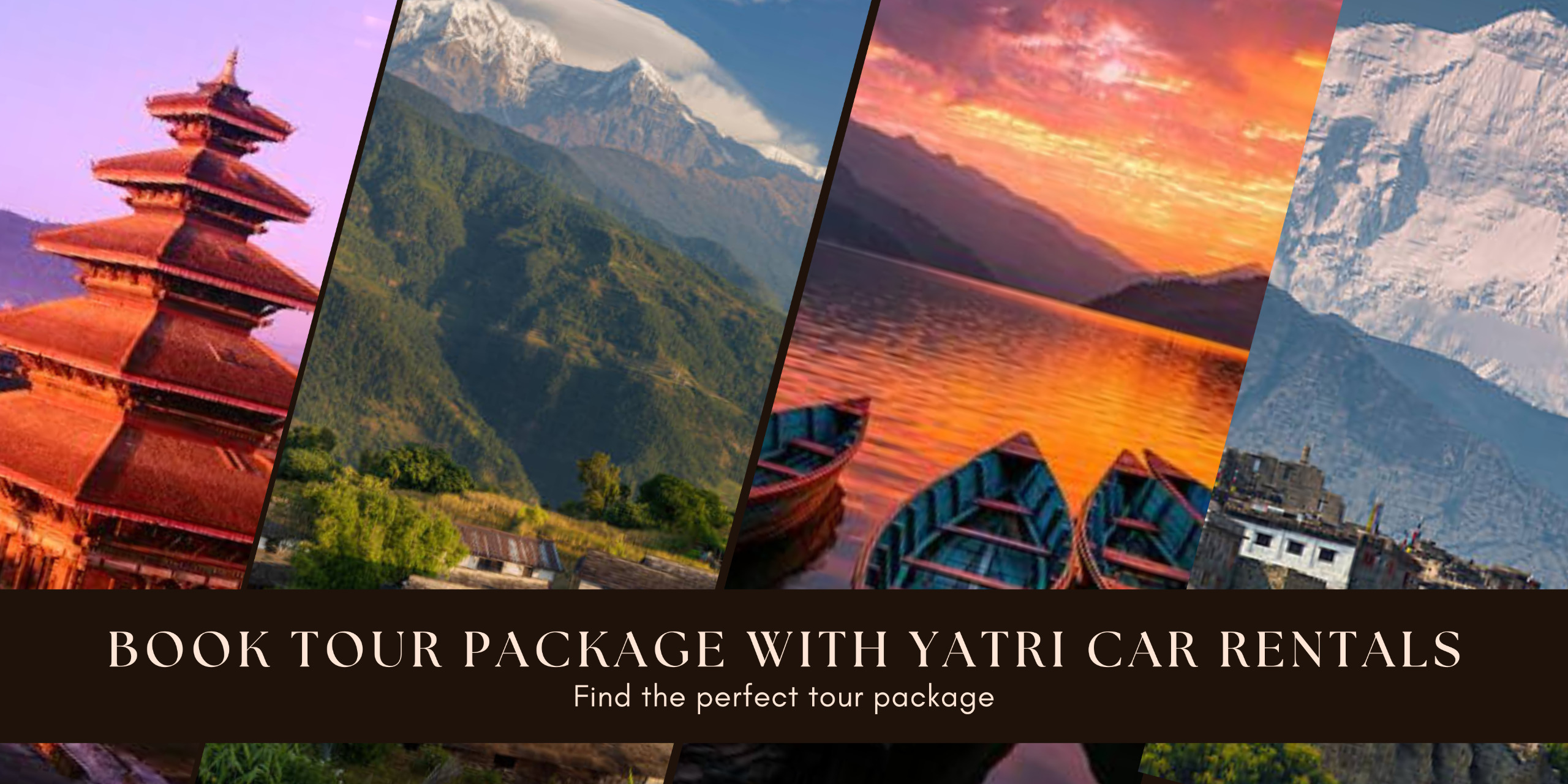
Somewhere between the sal forests of the Terai and the ice fields below Everest, Nepal manages to fit an entire continent's worth of scenery into a country roughly the size of Bangladesh. Snow leopards move through the same nation where one-horned rhinos wade through elephant grass. Temple bells in Kathmandu ring within a few hours' drive of a monastery perched at 3,800 meters. Few places on earth compress this much geography, and this much culture, into a single border.
That compression is exactly what makes Nepal worth visiting — not once, casually, but the way a lot of travelers end up doing it: as a trip they return to, again and again, because one visit never quite covers it.
Nepal rises in a straight line from sea level to the top of the world, and the landscape changes with it. The southern Terai holds flat farmland, wetlands, and national parks thick with wildlife. Move north and the land folds into the mid-hills — terraced fields, ridge-top villages, valleys like Kathmandu and Pokhara that sit cupped between mountains. Keep going and the hills give way to the high Himalaya, home to eight of the world's fourteen peaks above 8,000 meters, Everest among them.
Few countries let a traveler go from spotting a rhino at dawn to standing beneath an 8,000-meter summit within the same week. Nepal's tour packages are built around exactly that range, pairing lowland wildlife circuits with mountain routes so a single trip can cover both worlds instead of forcing a choice.
Nepal is home to more than a hundred ethnic groups and almost as many languages, and that diversity shows up in everyday life rather than in a museum display. A Newar farmer in Bhaktapur, a Sherpa guide in Solukhumbu, and a Tharu family in Chitwan are all Nepali, and all living quite differently from one another.
Religion sits comfortably alongside this variety. Hinduism and Buddhism have coexisted here for centuries, often within the same temple complex. Pashupatinath, one of the holiest Hindu sites in the world, and Boudhanath, among the largest Buddhist stupas anywhere, both sit inside the Kathmandu Valley — a fifteen-minute drive apart. Pilgrims travel from across the region for darshan at sites like these, and Yatri Car Rentals runs a dedicated Pashupatinath Temple darshan service with Rudravishek built around temple timings rather than a generic sightseeing schedule.
What visitors tend to remark on most, though, isn't a monument. It's the welcome. Nepali hospitality runs on a genuine, unhurried warmth — the kind that offers tea before it asks a question.
Reading about Nepal's diversity is one thing. Deciding where to spend a limited number of days is another. A few places tend to anchor most itineraries, and for good reason:
Yatri Car Rentals covers each of these directly, with dedicated services for a Pokhara tour, a Chitwan National Park tour, a Lumbini tour, an Everest Base Camp helicopter tour, a scenic mountain flight, and a Mustang tour by jeep for travelers who want the high desert without the multi-week trek.
Of everywhere in Nepal, Lumbini asks something different of a visitor. There's no summit to reach, no rapids to run — just the quiet, well-documented spot in the Terai plains where Queen Maya Devi gave birth to Siddhartha Gautama over 2,500 years ago, and where Buddhism itself effectively begins.
The Maya Devi Temple sits at the center, built around the exact site marked by an ancient stone that pinpoints the birthplace, with the sacred Puskarni pond and a still-standing Ashoka Pillar — erected around 249 BCE by Emperor Ashoka, one of the oldest inscribed monuments in South Asia — close by. UNESCO listed the site as a World Heritage property, and radiating out from that core is the Lumbini Development Zone, where more than two dozen countries with a Buddhist tradition — Myanmar, Thailand, Japan, Vietnam, South Korea, Cambodia, Germany, and others — have each built a monastery in their own architectural style. Walking between them in a single afternoon is a strange, moving experience: gold-leafed Theravada stupas a few hundred meters from Zen-quiet Japanese temple gardens.
For Buddhist pilgrims specifically, Lumbini is usually one stop on a wider circuit that includes Kapilvastu, where Siddhartha spent his early life, and often connects onward to Kushinagar and Bodh Gaya across the border in India. For travelers who aren't Buddhist, Lumbini still holds up as one of the more genuinely peaceful places on any Nepal itinerary — worth the detour on reputation for calm alone.
Lumbini sits roughly 20–22 kilometers from Bhairahawa (Gautam Buddha Airport), which connects by short domestic flight to Kathmandu, or it's reachable by a long road journey through the Terai for travelers combining it with Chitwan or Pokhara. Given the flat but sprawling layout of the monastic zone — walking it end to end easily covers several kilometers — most pilgrims and visitors get far more out of the visit with a private vehicle and driver who can move between monasteries at an unhurried pace, wait at each stop, and handle the Bhairahawa transfer without a rigid schedule dictating how long any one temple gets. Yatri Car Rentals' Lumbini tour service is built around exactly that pace, and pairs naturally with the all Nepal tour package for pilgrims looking to combine Lumbini with Kathmandu's Buddhist and Hindu sites, or the Muktinath tour for a longer pilgrimage circuit.
Most travelers know the Char Dham Yatra as an Indian pilgrimage — Badrinath, Dwarka, Puri, and Rameshwaram, the four cardinal points every devout Hindu hopes to visit once in a lifetime. What fewer people realize is that Nepal has its own parallel version. Hindu scripture names four sacred kshetras within Nepal itself — Pashupat Kshetra, Mukti Kshetra, Ruru Kshetra, and Baraha Kshetra — and of these, Pashupatinath and Muktinath are the two that draw pilgrims from across the region every year.
Pashupatinath, on the banks of the Bagmati River in Kathmandu, is one of the holiest Shiva temples anywhere outside India, and a UNESCO World Heritage Site in its own right. There's a saying that circulates widely among pilgrimage operators and devotees alike: that the Char Dham Yatra in India isn't truly complete without also paying respects at Pashupatinath. Whether or not a visitor holds that belief personally, it says something about the temple's standing that the idea persists at all. Thousands gather here during Maha Shivaratri each year, and the ghats along the Bagmati remain active with ritual life on any ordinary day, not just during festivals.
Muktinath sits at the opposite end of the experience — over 3,700 meters up in Mustang, reached by a dramatic drive through the Kali Gandaki gorge, one of the deepest in the world. Dedicated to Vishnu, it's counted among the 108 Divya Desams sacred to Vaishnavites, and unusually for a pilgrimage site, it's shared ground: Hindus, Buddhists, and Jains all consider it holy, and a Buddhist monastery sits within the same temple complex. Many pilgrims perform Shraddha rites at nearby Kagbeni in memory of family members before continuing up to the temple itself.
Together, the two sites form the pilgrimage most Hindu visitors to Nepal actually make — often across five to seven days, combining a Kathmandu-based Pashupatinath darshan with a flight to Pokhara and Jomsom, then a drive up to Muktinath. Yatri Car Rentals runs both legs of that journey directly: a Pashupatinath Temple darshan service with Rudravishek in Kathmandu, and a dedicated Muktinath tour covering the Mustang leg, with drivers who already know the darshan timings and the mountain road's quirks rather than learning them alongside the pilgrim.
Nepal earns its reputation as an adventure destination honestly. Trekking routes range from a gentle three-day walk near Pokhara to the full Everest Base Camp trail. Paragliding over Phewa Lake, white-water rafting on the Trishuli, jungle safaris in Chitwan, and mountain flights that skim past Everest without a single step of climbing all sit on the same menu.
None of that requires roughing it. A family with young children, or grandparents along for a pilgrimage, can move through the same country at a gentler pace — comfortable vehicles, planned stops, and a driver who already knows which roadside stop has a clean bathroom and a decent plate of momos. Yatri Car Rentals' family holidays tour is built specifically around that version of the trip.
October through November brings clear skies, stable mountain views, and the country's two biggest festivals, Dashain and Tihar — arguably the best window on the calendar. March through May offers rhododendron blooms across the hills and generally good trekking weather. Monsoon season, roughly June through September, brings landslide risk to hill and mountain roads and is best avoided for anything involving a long drive, though it's still a fine time for the Kathmandu Valley itself. Winter (December to February) is cold in the mountains but clear and quiet in the lowlands and valleys.
Here's the part first-time visitors underestimate: Nepal's distances lie. Kathmandu to Pokhara looks like a two-hour drive on a map and takes six or seven in practice, because the road climbs, switches back, and narrows around a mountainside for most of the way. Public buses cover the major routes but run on their own schedule, and self-navigating unfamiliar mountain roads — often left-hand traffic, for visitors used to driving on the right — adds a layer of stress most travelers don't need on holiday.
A private vehicle with an experienced local driver removes most of that friction. Someone who works these roads daily knows which stretch is under repair, which shortcut actually saves time, and when a detour is the safer call because of weather — not something a rental app or a rough map can tell you. Yatri Car Rentals runs chauffeur-driven vehicles out of Kathmandu, along with route-specific services like Kathmandu to Pokhara car rental, Kathmandu to Chitwan car rental, and airport transfer service for arrivals that land at odd hours.
Why is Nepal considered a top travel destination? Because very few countries pack lowland jungle, mid-hill valleys, and the world's highest mountains into one trip. Add a genuinely diverse culture and centuries of living religious history, and the range on offer is hard to match elsewhere.
How many days do you need to see Nepal properly? It depends entirely on what "seeing Nepal" means for the trip in question, since the country supports very different kinds of itineraries:
There's no single correct number — the honest answer is to work backward from what you actually want to do (culture, wildlife, trekking, pilgrimage, or some mix) and build the day count around that, rather than picking a fixed length and squeezing everything into it. Yatri Car Rentals helps plan itineraries around exactly this kind of trip-specific timing through its tour packages.
Is Nepal safe for tourists, including solo travelers and families? Yes, broadly. Tourist areas are well used to international visitors, and both solo travelers and families move through the country regularly. The main practical risks are road conditions in the hills and altitude at higher elevations, not personal safety.
Do I need a car rental to see Nepal, or is public transport enough? Public transport covers the major routes but runs on its own timetable and can be slow. A private car or jeep, ideally with a driver, is the more comfortable option for multi-city itineraries and is close to essential for hill routes like Mustang.
What's the single best first stop for a first-time visitor? Kathmandu Valley. It holds the highest concentration of UNESCO World Heritage Sites in the country, and it's the natural hub for onward trips to Pokhara, Chitwan, Lumbini, or the mountains.
Is Lumbini worth visiting if I'm not Buddhist? Yes. For Buddhist pilgrims it's a core spiritual destination, but even for travelers without a religious reason to go, the site's history — the exact birthplace marker, the Ashoka Pillar, and monasteries built by more than two dozen countries — makes it one of the more rewarding half-day-to-full-day stops in the country.
How are Pashupatinath and Muktinath connected to the Char Dham Yatra? They're not part of India's Char Dham directly, but Nepal has its own set of four sacred kshetras rooted in the same tradition, and Pashupatinath and Muktinath are the two most visited. There's also a long-standing belief among many pilgrims that a Char Dham Yatra in India feels incomplete without also visiting Pashupatinath in Kathmandu.
A country this layered rarely fits into a single visit, but a well-planned first trip covers far more ground than most people expect. The part that determines whether it feels effortless or exhausting usually isn't the destination — it's how you move between them.
Yatri Car Rentals has been getting travelers across Nepal's valleys, hills, and mountain roads for years, with a fleet built for the terrain and drivers who know these routes personally. Browse the full range of tours and packages, check the FAQ for anything still unanswered, or get in touch to start planning the itinerary.
Author: Yatri Car Rentals
Date: 10 August 2026